We think you're a bot, if not
please contact us
please contact us
info@LRLBuilders.Com

Thinking about a backyard cottage, a garage apartment, or an in-law unit at your Walnut Creek home? Learn the city's ADU rules before you pay for plans.
An accessory dwelling unit (ADU) is a small, separate home on the same lot as your house. It has its own kitchen, bathroom, and place to sleep. People use them for aging parents, grown kids, or rental income. See the benefits of an accessory dwelling unit if you're still deciding.
Walnut Creek updated its ADU ordinance in October 2024, and new California ADU laws took effect in 2026. This guide covers the current Walnut Creek ADU requirements: size limits, height, setbacks, fees, and the permit process.
In most cases, yes. Walnut Creek allows ADUs on any lot with a home on it, or a home being built. That includes single-family zones, multi-family zones, and mixed-use areas. Lots in zones that allow churches and other religious uses can qualify too.
There is no minimum lot size, so even a small lot can get an ADU.
You can choose from four types:
Walnut Creek gives you two paths. Your path changes almost every other rule.
Path 1: The 800 sq ft "state-exempt" ADU. Keep a detached ADU at 800 sq ft or less, 16 ft tall or less, and at least 4 feet from the side and rear lot lines. State law says the city must allow this unit. It also skips most local rules, like matching the look of your house. For most homeowners, this is the fastest and simplest path.
Path 2: A larger "non-exempt" ADU. If you want more than 800 sq ft, your size limit depends on bedrooms and lot size:
A few more size rules:
Most detached ADUs can be 16 feet tall. That fits one story with a sloped roof. Here are the exceptions:
Want a two-story detached ADU? A larger ADU that meets your main house's setbacks can use your zone's normal height limit. Check with the city before you design.
A setback is the open space between your ADU and your lot line. Walnut Creek ADU setbacks are:
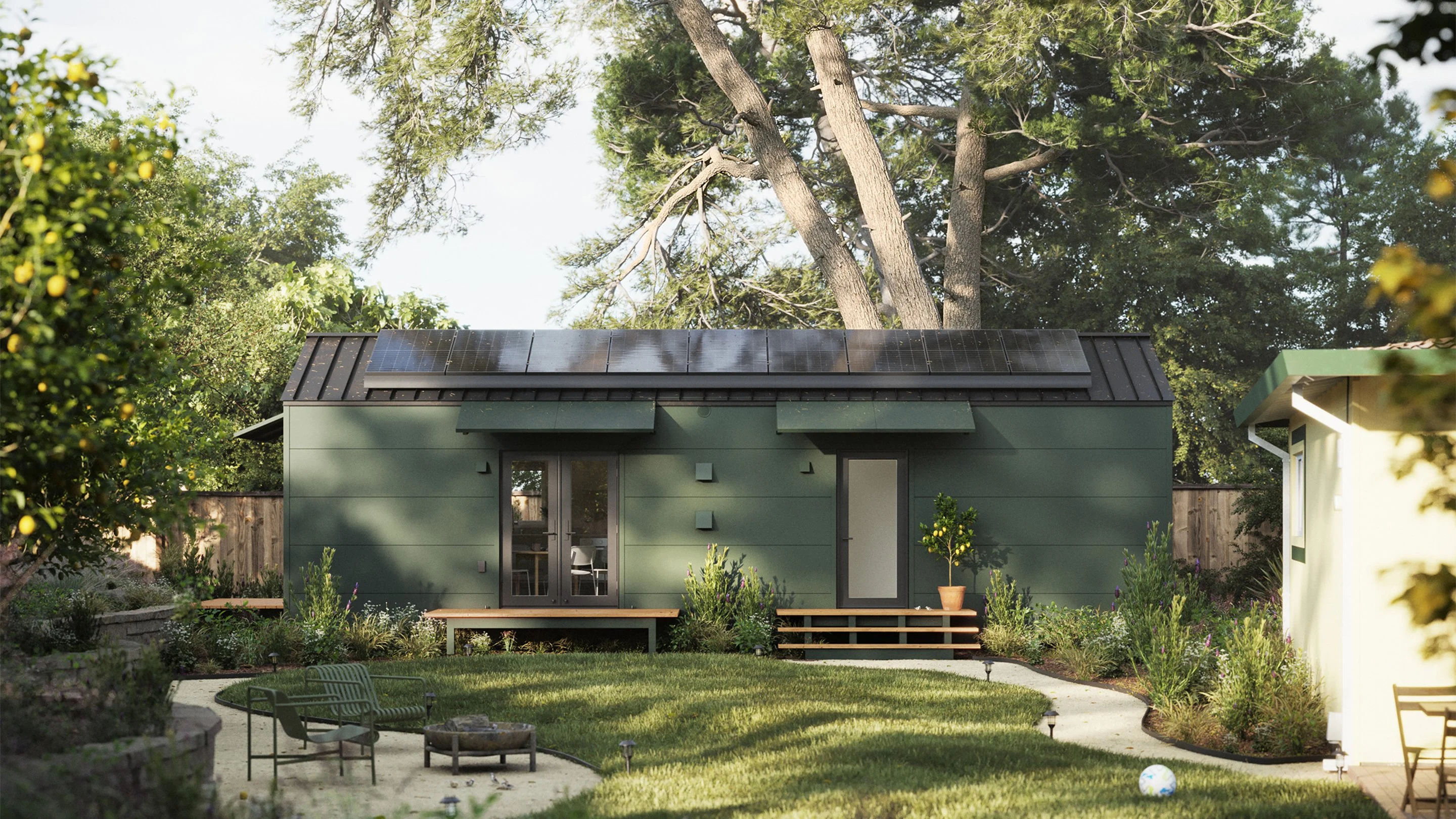
Single-family lots: The basic rule is one ADU plus one JADU. In many cases, California law lets you have three units:
Ask the city which mix works for your lot.
Multi-family lots: You can add up to 8 detached ADUs, but never more than the number of homes already on the lot. You can also turn unused space, like storage rooms or garages, into ADUs: at least one, and up to 25% of the existing units.
It depends on your path.
The 800 sq ft state-exempt ADU does not have to match your house, so you have more freedom with style and materials.
A larger ADU must be "architecturally consistent" with your home. These parts need to match the main house:
Odd shapes, like round or triangle floor plans, aren't allowed unless your house already has them.
Parking: Walnut Creek doesn't require any new parking for an ADU or JADU. Turning your garage into an ADU? You don't have to replace those parking spots.
Utilities: Most ADUs don't need their own electric, gas, or water meters. If your ADU is built inside existing space, the city can't make you add a new utility connection. A new detached ADU may need its own sewer or water line, and the district can charge a fee for it.
Fire sprinklers: You only need them in your ADU if your main house is required to have them.
Solar: New detached ADUs usually need solar panels under California's energy code. There are exceptions, so have your designer check early.
Most ADU fees come down to one number: square feet.
Here's how the impact fee share works. Say you build a 900 sq ft ADU next to an 1,800 sq ft house. The ADU is half the size of your house, so you pay half the normal fee.
What about the city's ADU rebate? It's over. All rebates were claimed by July 2025, and the program ended on August 31, 2026.
Hillside lots: Walnut Creek has special Hillside Performance Standards for land with a 15% slope or more. ADUs are exempt from those standards. A sloped lot can still need a soils report, retaining walls, and drainage work.
Fire zones: Some Walnut Creek neighborhoods sit in fire hazard zones. Look up your address on the CAL FIRE hazard map. If you're in a zone, your ADU may need fire-resistant roofing, siding, vents, and windows, and the fire district may review your plans.
Every ADU and JADU in Walnut Creek needs a building permit, including garage conversions. Here's how the process usually goes:
From application to permit, the total time depends on how complete your plans are and how many corrections the city asks for. Clean, code-ready plans move fastest.
Want help with the permit process? LRL Builders handles plans, permits, and construction for Walnut Creek homeowners. See how our ADU process works.
What about free city plans? The city's four pre-reviewed ADU plans are unavailable right now while they're updated for the 2025 building code. Check the city's website for updates.
Not for an ADU. You can rent out both your house and your ADU.
JADUs are different. Under a state law that took effect January 1, 2026 (AB 1154), the owner must live on site only if the JADU shares a bathroom with the main house. Walnut Creek's ADU page still lists the older, stricter rule, so confirm with the city before you plan a JADU rental.
No. ADUs permitted after January 1, 2020 can't be short-term rentals. Every rental must be 31 days or longer.
Plan on keeping them together. Walnut Creek's ADU rules have not allowed an ADU to be sold separately from the main home.
No. California law says an HOA can't ban or unreasonably limit an ADU on a single-family lot. It can still set reasonable rules.
The city runs an ADU Amnesty Program to help owners make older units legal.
LRL Builders is a licensed general contractor based in Walnut Creek (CSLB #1073610). We design, permit, and build detached ADUs, garage conversions, attached ADUs, and JADUs across the East Bay. Learn more about our ADU construction services, or contact us at (925) 905-9995 to talk about your lot.
ADU rules can change. Confirm details with the City of Walnut Creek Planning Division before you start.
Last updated: October 2026 | By the LRL Builders Team

Yes. Every ADU and JADU needs a building permit, including garage conversions.
The city must approve or deny a complete application within 60 days. Corrections to your plans can add time.
An attached ADU can be up to 25 feet and 2 stories. Most detached ADUs are limited to 16 feet (one story), unless the ADU meets your main house's setbacks.

We are a trusted and experienced General Contractor serving Walnut Creek, CA, and the East Bay Area.