We think you're a bot, if not
please contact us
please contact us
info@LRLBuilders.Com

Ask three different people how often you should remodel your bathroom and you'll get three different answers. An interior designer might tell you every five years. A real estate agent will probably say ten. Look at the box your new toilet came in and the manufacturer claims twenty years, easy.
So which is it?
The honest answer is that it depends on what's actually wearing out, what you can live with, and what you're trying to get out of the space. For most homeowners, a light refresh makes sense every 4 to 5 years, and a full bathroom remodel lands somewhere in the 10 to 15-year window. But that's a guideline, not a rule. If you've got mold creeping up the grout or a vanity that hasn't been updated since flip phones were cool, the timer doesn't really matter — it's time.
This guide walks you through what bathroom remodel frequency actually looks like in real life, the warning signs that you've waited too long, and how to figure out whether you need a quick facelift or a full gut.
Here's the breakdown most contractors and designers agree on, based on guidance from the National Kitchen & Bath Association (NKBA) and ongoing industry data from the Houzz Kitchen & Bath Trends Study:
These windows assume the bathroom is reasonably well maintained and gets normal daily use. A high-traffic family bathroom will wear out faster than the guest powder room nobody uses. A bathroom finished with cheap big-box materials won't hold up as long as one built with quality tile and solid-surface counters.
The numbers also shift based on why you're remodeling. If you're planning to sell within the next few years, updating sooner can pay off in resale value. If you're staying put for the long haul, you can stretch the timeline as long as everything still works and you still like looking at it.
The old "10-year rule" came from an era when bathroom materials genuinely didn't last as long. Vinyl flooring peeled, tubs cracked, vanities swelled in the humidity. Ten years was about the point where things started falling apart, so the industry built its rule of thumb around that lifespan.
Today, materials are dramatically better. A quality porcelain tile floor can last 30 to 50 years according to data from the NAHB Study of Life Expectancy of Home Components. A solid-quartz countertop will outlive your mortgage. Modern toilets and tubs are engineered for 20 years of daily use without complaint.
So while the 10-year rule still gets thrown around, it's less about whether your bathroom will physically fall apart and more about two other things:
Think of the 10-year rule as a reminder to take stock — not a deadline.
One of the most useful ways to plan your bathroom remodel schedule is to think component by component. Not everything wears out at the same rate. Here's roughly what you can expect, drawing from the NAHB Study of Life Expectancy of Home Components — the standard industry reference:
The takeaway: you don't have to remodel the whole room every time one thing fails. Most homeowners would be better off swapping out faucets and resealing grout on a rolling basis, then planning one larger remodel every decade or so.
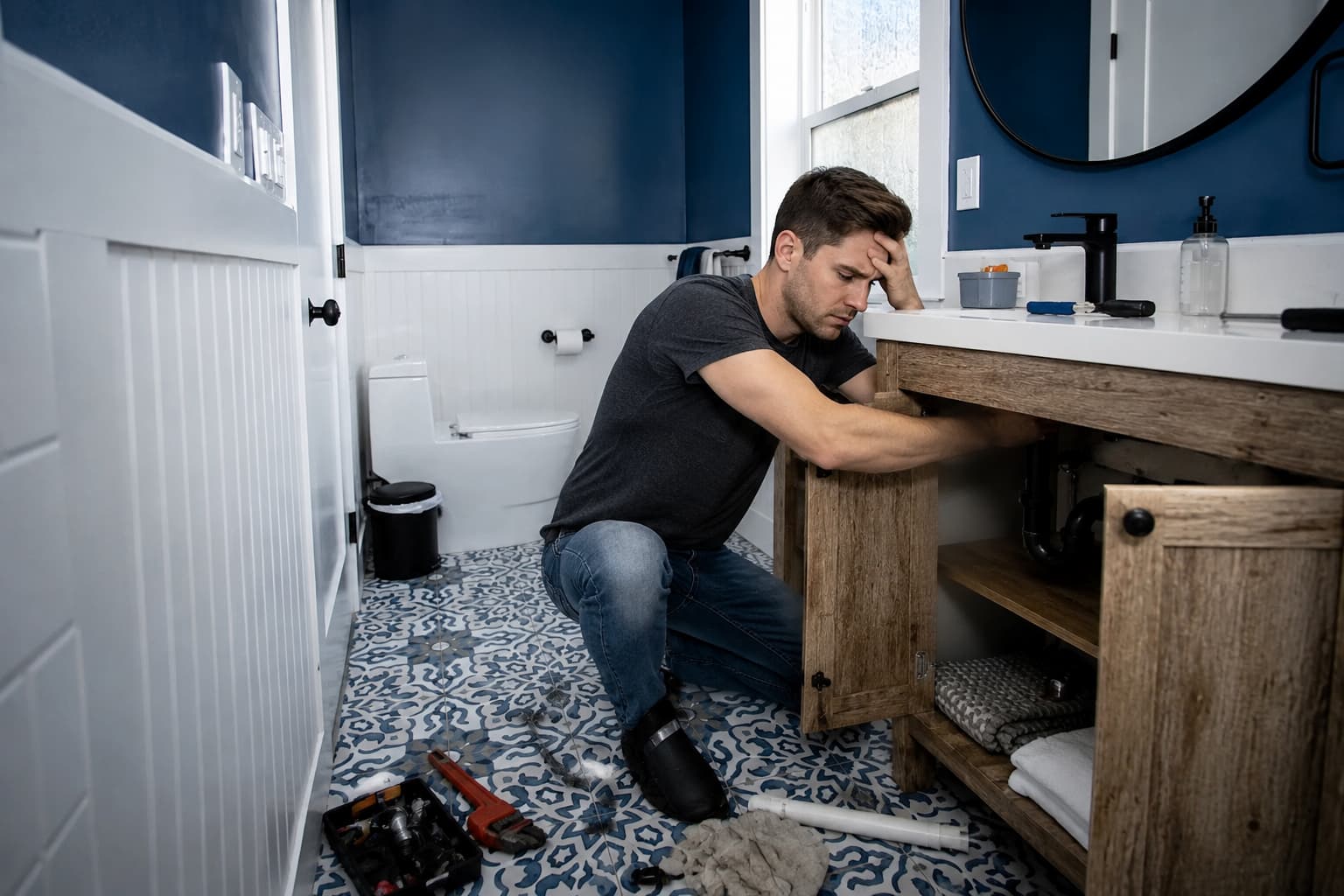
Forget the calendar for a second. Here are the actual warning signs that it's time to call a remodeler — regardless of when you last updated.
If you've scrubbed the grout, replaced the shower curtain, and the smell is still there, the problem is behind your walls. Persistent mold usually means either inadequate ventilation or a hidden leak that's been soaking your drywall and subfloor.
This isn't just cosmetic. It's a health issue per the EPA and it gets more expensive the longer you wait.
The towel bar keeps falling off. The toilet handle needs jiggling. The faucet drips, you fix it, it drips again. When you know the staff at the hardware store by name, your bathroom isn't just aging — it's begging to be retired.
A full or partial remodel addresses the root issues instead of slapping another bandage on them.
Soft spots in the floor near the toilet or tub. Stained or sagging ceiling underneath a second-floor bathroom. Peeling paint along the baseboards. Tile that flexes when you press it. All of these point to water that's been getting somewhere it shouldn't.
Don't put this off. Water damage compounds fast and what starts as a $400 plumbing repair turns into a $15,000 subfloor rebuild.
You walk into the bathroom and immediately feel like you've stepped into a different decade. Pink-and-seafoam tile. A vanity that looks like it belongs in a 1990s sitcom. Brassy gold trim everywhere.
Outdated design doesn't just look bad — it actively reduces what your home is worth and how quickly it'll sell. If you're within a few years of putting the house on the market, a mid-range bathroom remodel can still be one of the better interior ROI projects you can do, according to the latest Cost vs. Value Report from Zonda and JLC.
Single-sink vanity now serving two people who both leave for work at the same time. A bathtub nobody has used since the kids were small. A doorway too narrow for a walker if you're thinking about aging in place. Storage so cramped that toiletries live on every flat surface.
Your bathroom should fit the life you're living now, not the one you were living when you moved in.
Slow drains. Low water pressure. A toilet that runs for hours. Faucets that drip no matter how many times you replace the cartridge. These aren't isolated annoyances — they're symptoms of plumbing that's near the end of its useful life.
A remodel is a chance to update the pipes, valves, and shutoffs you can't easily reach any other way.
This one's harder to put on a checklist, but it matters. A bathroom should be a place you don't mind starting and ending your day in. If yours feels cold, cramped, harshly lit, or just joyless, that's a reason on its own. You don't need cracked tiles to justify a remodel.
Before you start pricing out demolition, figure out which tier of project you actually need. Most homeowners can pick from four levels (cost ranges below are national averages and will vary by region — see the HomeAdvisor bathroom remodel cost guide for current numbers in your area):
Level 1: Paint and Accessories ($200–$1,000) New paint, new towels, new shower curtain, new artwork, maybe new hardware on the existing vanity. Takes a weekend. Buys you a few more years before anything bigger.
Level 2: Fixtures and Finishes ($1,500–$6,000) Replace the faucets, showerhead, lighting, mirror, and toilet. Maybe a new vanity if the old one is dying. No demolition involved. A solid mid-life update for a bathroom that's still structurally sound.
Level 3: Surfaces and Layout-Light Remodel ($8,000–$20,000) New flooring, new tile in the shower, new vanity and countertop, refreshed plumbing fixtures. The layout stays the same, so plumbing rough-ins don't move. Two to four weeks of work.
Level 4: Full Gut Renovation ($20,000–$60,000+) Down to the studs. New layout, new plumbing routes, new electrical, new everything. This is what you do when the bones are bad or the layout fundamentally doesn't work. Plan on three to six weeks of disruption.
Knowing which tier you're in keeps you from over-investing in a bathroom that just needed paint, or under-investing in one that needed surgery.
A reasonable mid-size remodel runs about three to five weeks from demo to finishing touches. Here's a rough timeline:
A full gut with layout changes can stretch to 6 to 10 weeks. A simple fixture swap might be done in a long weekend.
Most contractors are slammed in spring and summer. If you have flexibility, fall and winter are usually the smart play — you'll often get better scheduling, faster turnaround, and sometimes more competitive pricing because contractors are filling out their off-season calendars.
The exception: if your remodel involves any exterior work or a window replacement, warm-weather scheduling makes more sense.
%20(1).jpg)
If selling is on the horizon, the rules shift a bit. Real estate data shows that a mid-range bathroom remodel typically recoups somewhere between 50% and 74% of its cost at sale, depending on which industry report you look at — the 2025 Cost vs. Value Report from JLC and Zonda places mid-range bathroom ROI at the higher end of that range, while the 2025 Remodeling Impact Report from NAR and NARI puts full bathroom renovations closer to 50% cost recovery. The strongest returns generally come from updates done within 1 to 3 years of listing.
A few practical guidelines:
Whatever timeline you're on, regular maintenance can buy you years. A few habits that genuinely help:
There isn't one right answer to how often you should remodel your bathroom — but here's the framework that works for most homeowners: plan on a small refresh every 4 to 5 years, a meaningful mid-range update around the 10-year mark, and a full renovation every 15 to 20 years or whenever the warning signs show up.
The biggest mistake isn't remodeling too often or too rarely. It's ignoring the signs that something's wrong until a small problem becomes an expensive one. If the grout is crumbling, the ventilation isn't working, or you genuinely can't stand walking into the room anymore, that's all the timeline you need.
When in doubt, get a contractor out for a free in-home assessment. A 30-minute walkthrough will tell you whether you need a $500 refresh or a full remodel — and that's a far better way to decide than counting the years since the last one.

Most experts recommend a light refresh every 4 to 5 years, a mid-range update every 7 to 10 years, and a full bathroom renovation every 10 to 15 years. If you see mold, leaks, or persistent plumbing problems, remodel sooner regardless of the timeline.
A well-built, well-maintained bathroom typically lasts 10 to 15 years before it needs a meaningful update, and 15 to 20+ years before a full gut renovation makes sense. Individual fixtures vary widely — tile can last 30+ years while caulk needs replacing every 5.
It's more of a guideline than a rule today. Modern materials last longer than they used to, but design trends still shift every 7 to 10 years, and a decade is a good interval for inspecting hidden plumbing, ventilation, and waterproofing.
Fall and winter are typically the easiest times to schedule. Contractors have more availability, lead times are shorter, and you may find better pricing because it's the off-season.
A mid-size bathroom remodel takes 3 to 5 weeks from demolition to finishing touches. A full gut renovation with layout changes can take 6 to 10 weeks, while a simple fixture swap can be done in a few days.
Yes, though not always dollar-for-dollar. Mid-range bathroom remodels typically recoup between 50% and 74% of their cost at resale, depending on the source. The 2025 Cost vs. Value Report puts the figure on the higher end, while the 2025 NAR Remodeling Impact Report reports about 50% cost recovery for full bathroom renovations. The highest returns come when the remodel is done within 1 to 3 years before listing.
If your layout works, the plumbing is sound, and you mostly want a fresh look, a partial remodel saves significant money and time. A full gut makes sense when the bones are failing, the layout doesn't fit your life, or you're seeing persistent water damage.
Yes. If your bathroom is still structurally sound, you can spread the work over time to fit your budget. Many homeowners start with cosmetic updates like paint, lighting, mirrors, or a new vanity, then replace flooring, tile, or plumbing fixtures later. However, if you're dealing with hidden water damage, mold, or aging plumbing, it's usually more cost-effective to complete everything in one remodel rather than paying for repeated labor.

We are a trusted and experienced General Contractor serving Walnut Creek, CA, and the East Bay Area.