We think you're a bot, if not
please contact us
please contact us
info@LRLBuilders.Com
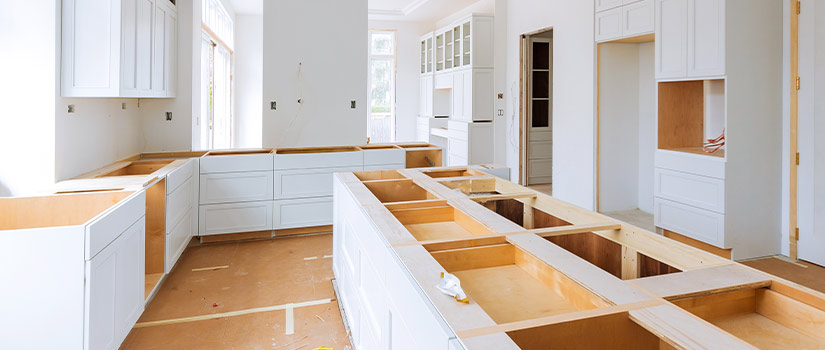
A kitchen remodel is one of the biggest home improvement projects you can take on , and before committing, almost every homeowner asks the same question: how long will my kitchen be out of commission?
The honest answer: it depends on the scope of work, your material choices, and , here in the East Bay, how your city handles permits.
These figures cover active construction plus typical lead times. Below, we break down each stage, including what permits actually take in Walnut Creek and nearby East Bay cities, based on real project experience.
Most homeowners underestimate the preparation phase. A typical mid-size project looks like this:
Month 1 — Planning and ordering. Budget, layout decisions, design selections (cabinets, countertops, appliances, flooring), permit application, and material orders. The decisions you make in this month determine whether the rest of the project runs smoothly.
Month 2 — Construction begins. Demolition, plumbing rough-in, electrical work, any structural changes, drywall, and paint.
Month 3 — Installation and completion. Cabinets, countertop templating and installation, flooring, appliances, lighting, backsplash, final inspection, and cleanup.
Before demolition starts, you'll need firm decisions on layout, cabinet style, countertop material, flooring, appliances, lighting, and plumbing fixtures. Working with an experienced kitchen remodeling contractor at this stage prevents the single biggest cause of delays: mid-project design changes.
This is where local knowledge matters most, and where generic national timelines mislead homeowners.
In Walnut Creek, permit speed depends entirely on whether your project touches structure:
Two East Bay realities worth knowing:
A contractor who submits complete, correction-free plans the first time can save you a full month here. This is a core part of what we handle for clients, navigating city and county requirements from concept to completion.

Material lead times, not labor, are the most common bottleneck:
Quartz and granite countertops, specialty appliances, and imported tile can all carry their own lead times. The rule: everything should be ordered before demolition day. Smart scheduling runs material lead times in parallel with permit review, so neither one adds standalone waiting.
Demolition itself is fast. What it reveals is the wildcard, water damage under the sink cabinet, outdated wiring (common in East Bay homes built before the 1980s), galvanized plumbing, or hidden structural issues. Budget both time and contingency money for surprises in any home more than 30–40 years old.
The behind-the-walls phase: relocating sink or appliance lines, adding circuits and outlets (modern kitchens almost always need more than the original panel supports), and installing beams if walls came out. City inspections happen here, rough plumbing and electrical must be signed off before walls close.
Wall repair, texture, primer, and paint, followed by flooring. Whether flooring goes in before or after cabinets depends on the material, hardwood typically runs under cabinets; some tile and vinyl installations happen after.
The milestone stage where the kitchen takes shape: base cabinets, wall cabinets, trim, and door/drawer adjustment. Critically, countertops can't be templated until cabinets are set, which is why cabinet delays cascade into everything downstream.
Templating, fabrication (typically 7–14 days for quartz or granite), and a 1–2 day installation. This is the most commonly underestimated wait in the whole project because the kitchen looks almost done while you're in it.
Appliance installation and hookups, backsplash, lighting, hardware, plumbing fixtures, touch-up paint, final inspection, and walkthrough.

Because each stage depends on the one before it. Electrical must pass inspection before drywall closes. Cabinets must be set before counters are measured. Counters must be in before the backsplash and sink hookup. A contractor who rushes the sequence doesn't finish faster, they finish twice.
From hundreds of Bay Area projects, the delay list is consistent:
Usually, yes. Expect noise, dust, and no kitchen access during working hours. For full remodels with structural work, some families choose to stay elsewhere for the heaviest 2–4 weeks , but most of our clients remain at home for the duration.
LRL Builders has remodeled kitchens across Walnut Creek, Lafayette, Orinda, Alamo, Danville, and the wider East Bay for over 18 years , handling design guidance, city permits, and construction under one roof. See a recent complete home remodel in Walnut Creek, or contact us for a free consultation and a realistic timeline for your home.

Active construction typically runs 8–12 weeks. Including design, permits, and material ordering, plan on 3–6 months start to finish.
Non-structural kitchen remodels often qualify for over-the-counter permits, which are typically approved within 1–2 weeks in most jurisdictions. Projects involving structural changes, layout modifications, or additional square footage usually require a full plan review, which can take several weeks depending on the city, project complexity, and permit workload. If revisions or additional documentation are required, the approval process may take longer.
A full renovation, realistically, no. A cosmetic refresh, paint, hardware, lighting, backsplash, can be done in 1–3 weeks.
Significantly. Keeping plumbing and electrical in their existing locations avoids plan review in most cases and removes the most invasive construction phases.
Countertops are templated after cabinets are installed; fabrication takes roughly 1–2 weeks, then 1–2 days to install.
Any plumbing, electrical, mechanical, or structural work requires a permit, which covers nearly every real remodel. Purely cosmetic work like painting, cabinet refacing, hardware, and most flooring generally does not. When in doubt, your contractor should confirm with the city before demolition, because unpermitted work surfaces during home sales and appraisals.
Not much. Money can buy in-stock materials and priority scheduling, but it can't compress permit review, inspection sequencing, cabinet fabrication, or countertop templating. The real speed levers are early decisions and complete permit plans, both free.
Shorter than the full project. The sink and stove typically go offline at demolition and come back at final hookup, usually 4–8 weeks for a standard renovation, even if the total project spans several months. Planning and permits happen while your kitchen still works.

We are a trusted and experienced General Contractor serving Walnut Creek, CA, and the East Bay Area.